 Sylvia Melena
Poor communication slows projects, fuels turnover, and drains profit.
If you’re an HR leader, senior manager, or consultant, you already know fixing this requires more than generic soft skills training.
That’s where DISC Leadership comes in.

The Leadership & Management Culture Gap
According to Gartner’s 2025 Top 5 HR Trends and Priorities Report, based on its survey of 1,400+ HR leaders across 60 countries, leadership and management development tops the priority list.1
And for good reason: leaders and managers shape people and organizational success.
What’s the second priority? Organizational culture.2
And the two go hand in hand.
Yet, Gartner also found that 57% of HR leaders feel managers don’t advance cultural values.3 It’s a sobering gap.
That’s where DISC leadership comes in.
By building behavioral awareness and agility, DISC gives leaders and teams a shared roadmap for working together—without the drama.
What Is DISC?
DISC is an evidence-based behavioral model, not a personality label. It groups observable behaviors and emotions into four primary styles of leadership communication.
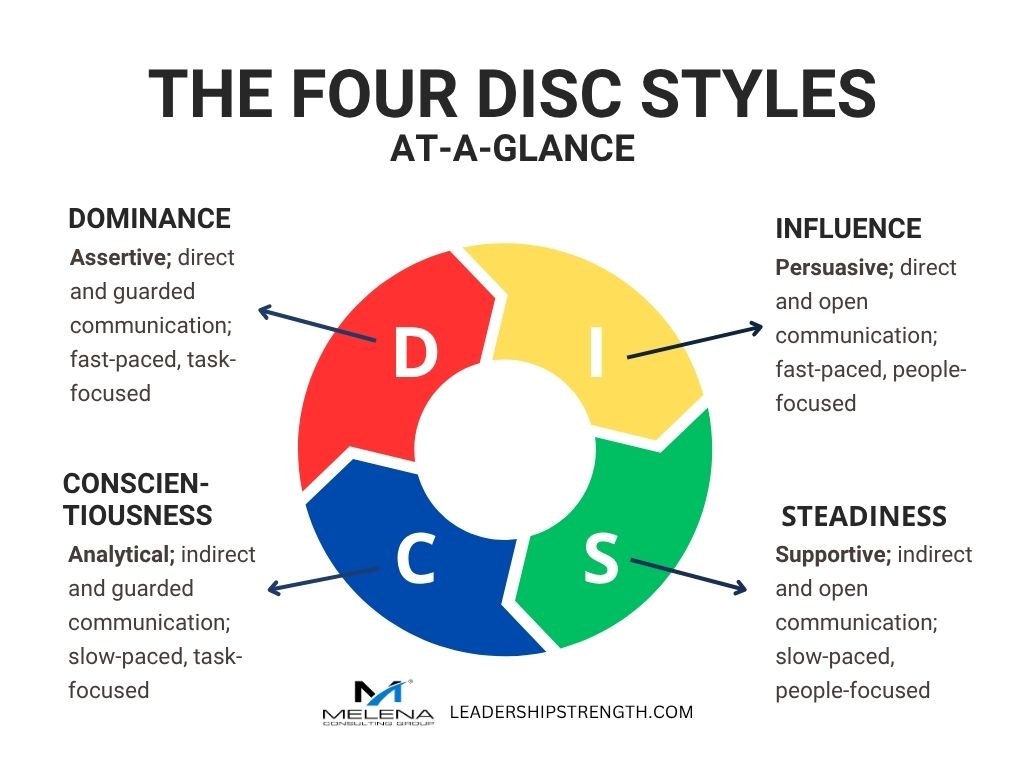
Because DISC reveals behavioral tendencies and priorities, rather than fixed personality traits, leaders can adjust their approach without feeling inauthentic.
Want a closer look? Explore the article about the Four DISC Styles of Leadership Communication.
Putting DISC Leadership to Work
A DISC Leadership assessment report alone changes nothing.
True DISC leadership means applying the insights of the robust assessment report to everyday management practices. Here are some ways high-performing leaders do it:
- Coaching: Tailoring feedback to drive growth, not defensiveness.
- Delegation: Matching tasks to natural strengths and pacing to boost productivity.
- Decision-Making: Balancing speed, accuracy, and the strengths of the team.
- Conflict Resolution: Turning personality clashes into collaboration opportunities.
- Communication: Adapting tone and approach to ensure messages are heard and acted upon.
- Developing Others: Building growth plans aligned with individual motivators and team goals.
- Motivating: Inspiring action by tapping into what truly drives each team member.
- Counseling: Addressing behavior and underlying concerns with empathy.
- Correcting Performance: Encouraging transparent, respectful, and mindful course corrections.
- Recognizing Contributions: Celebrating wins in ways that resonate with each style.
For specific examples of friction points between the DISC styles and practical examples of how leaders can adapt their approach for each style in workplace scenarios, see How the DISC Model Actually Improves Team Communication.
When leaders consciously adjust their words, tone, and follow-through to suit the styles of the team, peers, and bosses, misinterpretations plummet and productivity climbs.
Why DISC Leadership Matters
Great leadership isn’t theoretical. It drives results.
Here’s why DISC leadership matters now:
- DISC Leadership Helps Shift Culture: Style-aware leaders do more than manage. They shape team and organizational culture. By fostering trust, improving communication, and reducing friction, they create environments where collaboration and accountability thrive.
- Teams Need a Common Language: Teams need a deeper understanding of verbal and non-verbal cues. DISC provides a shared shorthand: “She’s a high C; give her data in advance.” The result? Smoother collaboration and fewer misunderstandings.
- Speed of Change Demands Agility: When priorities shift, self-aware leaders know how to pivot quickly—because they understand their natural styles, blind spots, and how to adapt.
- Employees Expect Personalization: Today’s workforce expects to be treated as individuals. DISC equips leaders with a blueprint for personalized communication, motivation, and development.
Ways HR Pros and Consultants Put DISC Leadership to Work
Here’s how HR leaders, coaches, and consultants turn DISC Leadership insights into impact. They:
- Build Leadership Pipelines: Spot and develop high-potential managers and supervisors who already show style agility.
- Strengthen Onboarding: Provide new managers with a DISC debrief in the first week so they can start strong.
- Deliver Quick Wins: Use a 90-minute DISC workshop to create immediate “aha” moments that energize teams.
- Create Ongoing Value: Anchor coaching or team development efforts in DISC insights for sustained momentum.
- Measure What Matters: Use pre- and post-DISC pulse surveys to track improvements in communication, collaboration, and psychological safety.
- Develop the Leadership Team, Not Just Individuals: Leverage DISC Team Reports to elevate the entire leadership culture, not just one leader at a time.
Visit the DISC Facilitator Hub

Conclusion
Strong leadership isn’t optional. It’s an organizational priority.
In this article, I covered:
- What DISC is and an at-a-glance summary of the four DISC leadership styles,
- How high-performing leaders apply DISC to everyday management,
- Why DISC leadership matters, and
- Ways HR and consultants put DISC Leadership into action to drive real results.
So, what’s the bottom line?
With DISC Leadership, the culture shifts, collaboration strengthens, and teams thrive.
About the Author

Sylvia Melena is the Founder & Principal of Melena Consulting Group, a leadership and organizational development company. Sylvia is the two-time international award-winning and best-selling author of Supportive Accountability: How to Inspire People and Improve Performance and its Spanish translation, Responsabilidad solidaria: Cómo mejorar el rendimiento laboral por medio del apoyo. She’s also the best-selling author of Lead Magnet Formula: How to Plan, Create, and Design a Free E-Book in Just 6 Days That Attracts More Clients.
Her leadership philosophy has been featured in the Society of Human Resources Management HR Today, the Human Performance Association, Entrepreneur, LEADx, My Quest for the Best, and other outlets.
Reference:
1, 2, 3 Gartner. (n.d.). Top 5 hr trends and priorities that matter most in 2025. https://www.gartner.com/en/human-resources/trends/top-priorities-for-hr-leaders. Date accessed: 7/24/25.


