 Sylvia Melena
You’ve hired smart, capable people. They care about the work, they want the team to succeed, and yet somehow the same conflict keeps showing up: meetings that go sideways, performance conversations that land wrong, and projects that stall because two people on the same team can’t seem to get on the same page.
The problem usually isn’t skill or intention. It’s style.
People process information differently, move at different paces, and need different things from their interactions to feel heard and effective.
That’s where the DISC model proves its value. It gives teams a shared language for behavioral differences that otherwise go unnamed and unmanaged.
This article provides senior leaders with a practical information on how to implement a DISC rollout.
- Why Most DISC Rollouts Fall Short
- Moving from Awareness to Impact
- What the Four DISC Styles Actually Look Like at Work
- Choosing the Right DISC Solution (Free or Paid)
- Validated Assessments vs. Free DISC Tests: What the Difference Costs You
- What a Brandable DISC Platform Unlocks for HR Teams and Consultants
- Using DISC in the Workplace: Your Step-by-Step Rollout
- Applying DISC to Real Workplace Scenarios
- Measuring DISC’s Impact: 4 Metrics Worth Tracking
Why Most DISC Rollouts Fall Short
Most DISC rollouts fail to deliver lasting results because they stop at awareness.
Participants complete an assessment, attend a workshop, learn the four styles, and leave with a better understanding of themselves and others. But awareness alone rarely changes how people communicate, collaborate, give feedback, or resolve conflict.
Using DISC in the workplace effectively means applying that knowledge in hiring conversations, team debriefs, performance discussions, and the small daily interactions that shape how people work together. That gap between knowing and doing is where many organizations lose momentum.
Moving from Awareness to Impact
In my experience using DISC to boost collaboration, one pattern emerges consistently: teams that treat it as a one-day event get a bump in awareness and not much else.
What the Four DISC Styles Actually Look Like at Work
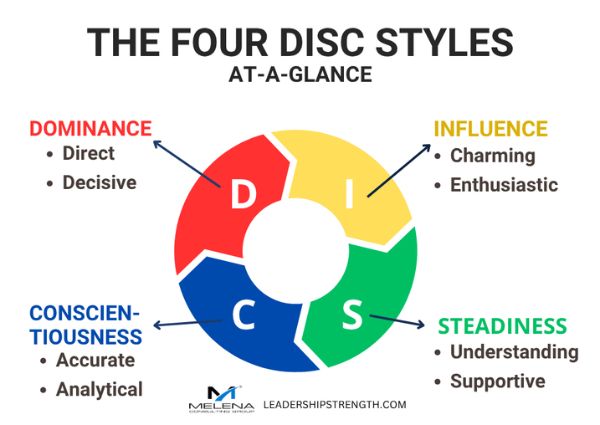
The DISC Model is only useful if you can recognize each style in action, not just on a report. Knowing that someone is a “high C” means very little if you can’t picture what that looks like when a deadline gets moved up or a decision gets made without them. Start here before you do anything else with the framework. For a concise overview of the four DISC styles, see a quick primer that maps each style to common workplace behaviors.
D and I Styles: The Dynamic Pair
Dominance (D) styles are task-focused and results-driven.
They make decisions quickly, set the direction, and get frustrated when the pace slows down or conversations circle back to points they consider settled. In a meeting, the D style is the one pushing toward a decision, trimming discussion they see as unnecessary. Their directness feels like confidence to some teammates and dismissiveness to others, especially those who need more time to process.
Influence (I) styles bring energy, optimism, and relationship focus. They’re the ones who open a meeting with a story, remember everyone’s name, and make a new hire feel welcome on day one. Their strength is connection and enthusiasm; their blind spot is follow-through on detail-heavy work and discomfort with giving or receiving blunt feedback. They thrive in environments where ideas are celebrated and collaboration is the norm.
S and C Styles: The Deliberate Pair
Steadiness (S) styles are the quiet backbone of most teams. They value consistency, harmony, and predictability. They show up on time, meet their commitments, and keep the emotional temperature of the team stable. Push an S style too fast or announce a major change without warning, and you’ll see resistance that looks like passive disagreement but is really a need for time and context to adjust.
Conscientiousness (C) styles are analytical, precise, and quality-focused. They’re the ones asking the questions nobody else thought to ask before the team commits to a plan. In a project review, the C style will catch the detail that would have caused a problem six weeks later. They need time to evaluate before they commit, and vague or incomplete information genuinely impairs their ability to move forward. That’s not stubbornness; it’s how they’re wired to operate well.
Why Your Team’s DISC Style Mix Matters
When it comes to high-performing teams, DISC style balance is the key.
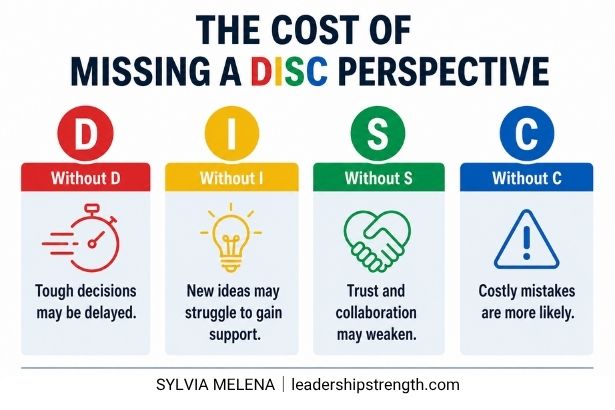
Without D styles, teams may hesitate to make tough decisions. Without I styles, they may struggle to generate enthusiasm and gain support for new ideas. Without S styles, relationships and trust may suffer. Without C styles, careful analysis may suffer, increasing the likelihood of costly mistakes.
One of the most effective early DISC debrief activities is building a team style map: a single chart that plots every team member’s primary style. It typically takes 10 to 20 minutes and immediately makes the concept concrete. Suddenly, the team can see why certain conversations are difficult, why certain decisions drag, and which perspectives are underrepresented when the group is under pressure.
Choosing the Right DISC Solution (Free or Paid)
The DISC market has three primary tiers of options, and picking the wrong one for your situation costs you credibility and time, not just money. The decision should be based on the scope and intent of your rollout, not simply on what’s most affordable or most recognizable.
Validated Assessments vs. Free DISC Tests: What the Difference Costs You
Free DISC Surveys
Free self-serve surveys are widely available online and take about ten minutes to complete. They give a quick sense of someone’s likely style and work well for low-stakes curiosity or a casual team conversation. What most don’t provide is evidence of validation, depth of behavioral insight, or the facilitation materials needed to run a professional team session. For organizational development work, the gap in capability is significant.
If you want a fast, accessible option to let participants explore their likely style, try a free DISC style survey as an introductory tool, but plan the rest of your program around validated reports and facilitation.
Traditional DISC Assessments
Traditional DISC profiles and reports sit in the middle tier: validated, report-based, available per-license or in bulk, and straightforward to administer. They’re the right fit for organizations that want a credible individual DISC assessment without committing to a full training platform.
Complete Coaching & Training Ecosystems
At the top tier, full training and coaching ecosystems like the LeadershipStrength™ Suite bundle various assessments with digital learning platforms, team comparison tools, facilitator materials, and ongoing access.
The scope of your rollout should drive your tier decision, not the size of your budget alone. A single department learning to communicate better doesn’t need the same infrastructure as a company-wide culture transformation.
What a Brandable DISC Platform Unlocks for HR Teams and Consultants
There’s a specific scenario where a standard vendor portal creates a problem: when the organization wants to scale or own the experience, or when a consultant needs to deliver professional-grade tools without pointing participants to another company’s branded platform.
Both situations require a different solution.
The brandable DISC assessment platform at LeadershipStrength.com was designed for exactly this use case. HR teams can run a white-label rollout that keeps participants inside their organization’s experience from start to finish. Independent trainers and consultants get professional-grade assessment tools and facilitator materials they can deliver under their own brand, without directing participants to a third-party platform.
Using DISC in the Workplace: Your Step-by-Step Rollout
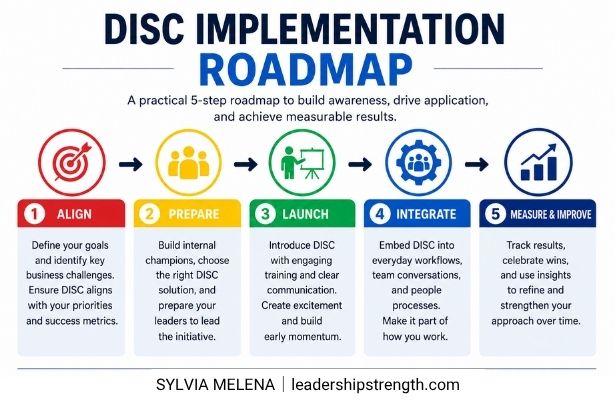
The three-phase approach below works for teams of five to fifty, and each phase addresses a specific failure point.
Phase 1: Pre-Work and Buy-In: Weeks One and Two
Before a single assessment goes out, clarify the rollout’s purpose with your leadership team.
Are you addressing communication friction? Preparing for a team restructure? Building a foundation for better performance conversations? The answer shapes everything: which assessment questions you emphasize in the debrief, which activities you run, and what outcomes you measure. Without this clarity, participants show up to a workshop about behavioral styles and leave without knowing why it mattered.
Brief the manager on what to expect, including how their own style influences how they’ll receive feedback about their direct reports. Then distribute assessments with a clear explanation: why the organization is doing this, who will see individual reports, and what the results will not be used for. Skipping this preparation is a common reason DISC rollouts feel like a one-day event with no lasting impact.
Phase 2: Deliver a DISC Workshop and Debrief Session
Having ready-to-use materials can significantly reduce preparation time. The DISC Facilitator Kit from Melena Consulting Group is designed to reduce the build-from-scratch burden of delivering the DISC workshop, so you’re not beginning with a blank slide deck.
Plan for 90 to 120 minutes for your first session. Open by restating the purpose of the session and confirming norms around confidentiality and respect. Spend time reviewing the model so everyone is working from the same foundation, then build the team style map together. Use it as a discussion anchor, not a decoration.
From there, run a report debrief focusing on how each style shows up in the team’s real work: meetings, decisions, feedback conversations, deadlines. Run one or two structured DISC debrief activities to make adaptation concrete. A group break-out for the four DISC styles is an excellent way for participants to engage with and apply the content.
You can deliver additional DISC sessions with a decision case study. A simulation takes this further by assigning each style to a different phase of a team decision: D leads the goal; I generates options; S checks for team impact; C evaluates risks and details. Walking through this sequence shows how each perspective strengthens the outcome. If the team is experiencing collaboration issues, you can pair them up for DISC perspective swaps. The quality of facilitation matters more than the length of the agenda.
Phase 3: Follow-Up Activities That Make DISC Stick
A single workshop builds awareness. Sustained behavioral change requires reinforcement over time.
Two to three weeks after the debrief, hold a 20-minute team check-in to surface what people tried, what worked, and what still feels hard. Manager-led one-on-ones that reference DISC style when giving feedback, for example, “I know you like to see the data before committing, so here’s what I’ve got”, move the model from a workshop concept into a daily practice.
The start/stop/continue format is one of the most effective tools for turning DISC insights into specific requests. Each person identifies one communication behavior they want a teammate to start doing, one to stop, and one to continue. It’s structured, specific, and grounded in the style awareness the team just built. Done well, it translates DISC awareness into practical collaboration agreements the team can use every day.
Applying DISC to Real Workplace Scenarios
Behavioral awareness is only valuable when it changes what people actually do.
Adapting Communication by Style
Each DISC style has a clear preference for how information should be delivered.
D styles want the bottom line first: what’s the decision, what’s the timeline, what’s needed from them. I styles want context and a human connection before the details, so leading with relationship before task is not small talk, it’s strategy. S styles need a collaborative tone and enough time to process; urgency without context triggers resistance, not speed. C styles want data, logic, and a written summary they can review after the conversation; verbal-only updates leave them uncomfortable.
A practical example: a manager preparing a project status update for a mixed-style team. For the D and I teammates, the email leads with status and next steps in two sentences. For the C teammate, the same update includes a data summary and a clear timeline. For the S teammate, the tone shifts slightly, emphasizing how the change was decided and who was involved.
The information is identical. The delivery is adapted. And all four styles feel valued.
This is the leadership communication capability DISC develops.
Resolving Conflict Between Contrasting Styles
A frequent friction pair in the workplace is D and S. The D style reads the S style as slow, resistant, and uncommitted. The S style reads the D style as aggressive, dismissive, and careless about people. Neither reading is accurate, but both feel completely real to the person experiencing them.
“What looks like resistance is actually this person needing context before they can commit” reframes the behavior as predictable, not personal. Walk both people toward the shared goal: what outcome does the D style need? What does the S style need to feel confident moving forward? DISC gives you a map for that negotiation without requiring either person to change who they are, just to understand each other better.
Tailoring Performance Conversations to Each DISC Style
A performance conversation that works well for one style usually lands badly for another.
D styles respond to direct feedback tied to outcomes; they don’t need softening and often distrust excessive explanation. I styles need the relationship preserved first, so leading with the positive is not avoiding the hard message, it’s making the hard message receivable. S styles need privacy, calm, and emotional safety; public feedback or blunt delivery shuts them down rather than opening them up. C styles want specific data and a concrete improvement plan without criticism; vague feedback is genuinely unhelpful to them, not just uncomfortable.
Managers’ own DISC styles affect how they naturally deliver these conversations, too. A high-D manager delivering feedback to a high-S employee may move too fast and too bluntly without realizing it. Awareness of both styles in the relationship is what makes the conversation effective. For quick ideas on ways to apply DISC to leadership practices, see What is DISC Leadership & How Can You Put It to Work?
Measuring DISC’s Impact: 4 Metrics Worth Tracking
Measurement is what separates a one-time DISC workshop from a DISC program.
These four metrics give HR leaders and consultants concrete evidence of impact without requiring a new data system.
Short-Term Signals: Communication and Conflict Data
Depending on the follow-up, two indicators can show up within 30 to 60 days of a rollout and are straightforward to track.
Self-reported communication quality on pulse surveys, tracked before and after the rollout, shows whether team members feel better understood and more confident navigating style differences. Conflict escalation rate, measured by how frequently team friction gets flagged to HR or a manager for intervention, shows whether the team is resolving issues earlier and at a lower level.
Neither metric requires a new system. Many organizations already run pulse surveys and monitor escalation volume. The critical step is establishing a documented baseline before the rollout, not after. Without pre-data, you’re measuring direction without knowing where you started.
Long-Term Indicators: Engagement and Performance Trends
Employee engagement scores, particularly items tied to team communication, manager relationship quality, and psychological safety, are higher-stakes indicators of DISC’s organizational impact.
DISC can contribute to meaningful improvements in these scores, but lasting change depends on how consistently leaders apply and reinforce the model over time.
However, DISC is a tool. Leaders make the biggest difference in the speed and sustainability of transformation.
Individual and team behavioral change should map directly to the goals defined at the start of the rollout. If the program was designed to improve how managers run performance conversations, the outcome metric should measure conversation quality and frequency, not something tangential.
That documentation is what turns a single workshop into an ongoing organizational development investment worth sustaining.
Put It to Work: Using DISC in the Workplace Starts Here
DISC works when it moves beyond just a behavioral style assessment into a structured communication management system that teams actually use every day.
And here’s how to accomplish this:
- Know the styles well enough to recognize them in real interactions.
- Pick the right DISC assessment for the scope of your rollout.
- Run a real three-phase implementation with preparation, a facilitated debrief, and structured follow-up.
- Apply the model to the specific scenarios where your team’s friction actually lives.
- And measure the transformation.
For HR teams and consultants who want to deliver a professional DISC rollout without building every piece from scratch, the brandable DISC platform and facilitator kits at LeadershipStrength.com give you the infrastructure to do it right from day one. The tools are ready, the facilitation materials are built, and the platform supports your brand.
Explore the DISC platform and facilitator resources at LeadershipStrength.com and reach out to discuss your options and select the one that aligns best with your organizational goals.
Who Heads Melena Consulting Group?

SYLVIA MELENA is the Principal of Melena Consulting Group, a leadership and organizational development company. She is also the international award-winning and best-selling author of Supportive Accountability: How to Inspire People and Improve Performance and the creator of the Supportive Accountability Leadership™ Model.